
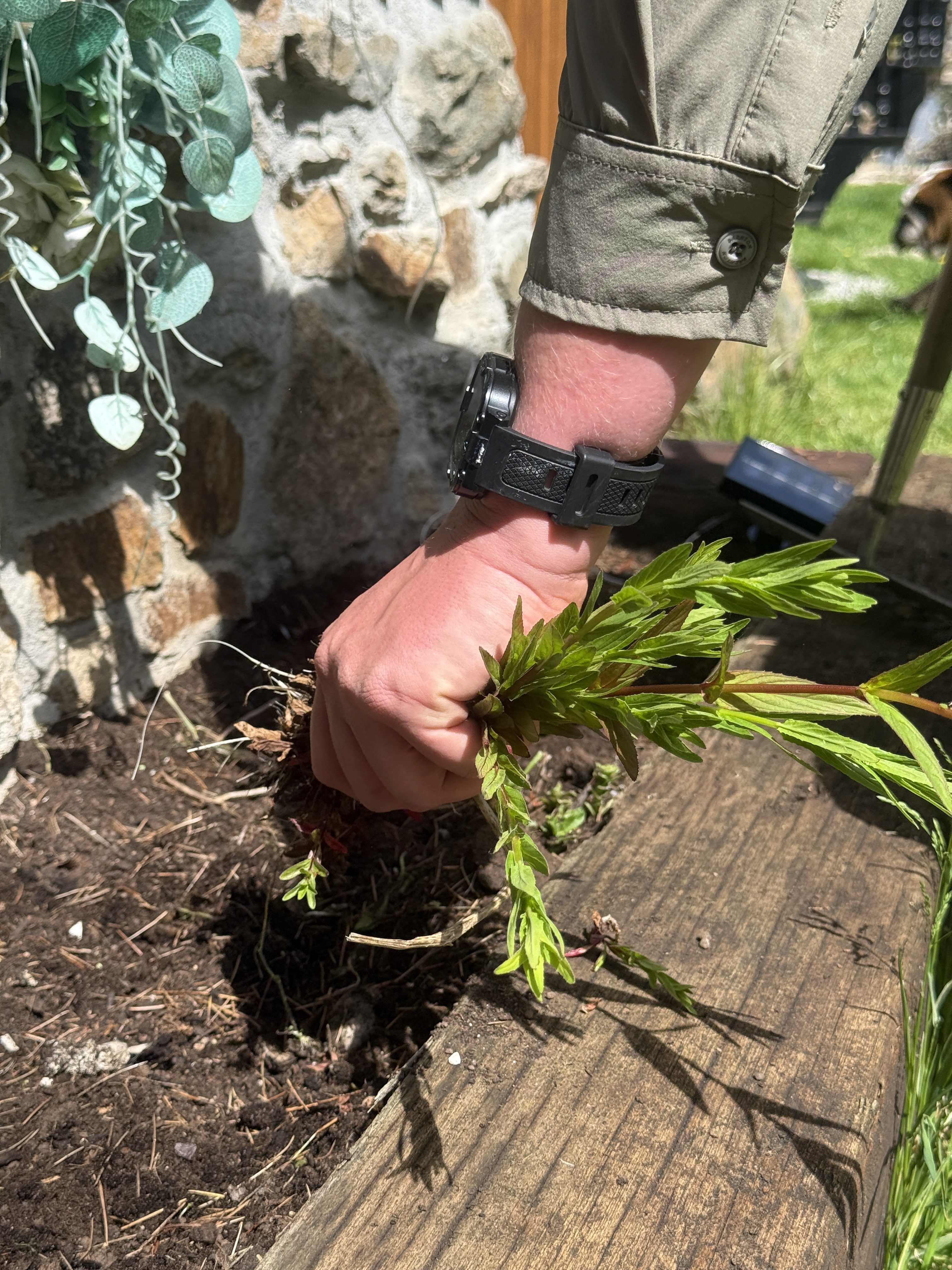
Weeds are one of those garden problems that start small and quietly get out of hand. A few dandelions in spring become a lawn full of them by summer. A bit of ground elder along the fence line spreads further than you’d expect by the time autumn arrives. And in Cornwall specifically, the mild, wet climate that makes gardens here so green and lush also makes conditions near-perfect for weeds to establish themselves quickly and spread aggressively. After twelve years working in gardens across Cornwall – from Redruth and Falmouth up to Launceston and Bude – here’s everything you need to know about weed control, what to watch out for, and how to keep on top of it.
Why Do Gardens in Cornwall Get So Many Weeds?
The honest answer is that Cornwall’s climate works in weeds’ favour just as much as it works in your garden’s favour. The long growing season, high rainfall, and mild winters mean that weeds here can establish, spread, and re-establish faster than in most other parts of the UK.
Weeds that die back completely in a cold winter elsewhere will often survive in Cornwall with their root systems intact, ready to push back up the moment temperatures rise. Combined with the fact that many Cornish gardens sit on clay or loam-heavy soil that retains moisture well – perfect for weed root development – it means staying on top of weeding is a year-round consideration here rather than a seasonal one.
The Most Common Weeds in Cornish Gardens
Different weeds need different approaches. Understanding what you’re dealing with is the first step to dealing with it effectively.
Dandelions: Probably the most recognisable. The taproot goes deep – pull it without getting the full root and it regrows. Hand-digging is effective if done properly; a long-handled weeding tool that gets underneath the full root is far better than pulling at the leaves.
Ground elder: One of the most frustrating weeds in any garden. It spreads via an underground network of white rhizomes, and any small piece left in the soil will regrow. Persistent, methodical removal over multiple seasons is the only reliable approach without chemicals.
Bindweed: Twines around other plants and spreads via root fragments in the same way as ground elder. Common in Cornish gardens, particularly in borders and along fence lines. Needs persistent attention throughout the growing season.
Creeping buttercup: Extremely common across Cornwall, particularly in lawns with compacted or poorly drained soil. Spreads via runners along the surface. Regular mowing keeps it under control in lawns; hand removal is needed in borders.
Nettles: Useful for wildlife but unwelcome in a garden border or path edge. Spread via both seed and underground rhizomes. Cutting them back repeatedly weakens them over time; full root removal is more effective for a permanent result.
Brambles: Common along boundary lines, particularly in gardens with adjacent woodland or hedgerow. Once established they’re vigorous and will spread quickly if left unchecked. Repeated cutting weakens them but root removal is needed to stop regrowth.
Clover: Common in Cornish lawns, often encouraged by low soil nitrogen. Good for pollinators but a sign the lawn may benefit from feeding. Generally managed through lawn care rather than direct removal.
How to Remove Weeds Effectively – and Stop Them Coming Back
There are a few principles that make a real difference to how effective weed removal is long-term:
Remove the whole root. For deep-rooted or rhizome-spreading weeds, pulling the top growth off at soil level makes the garden look tidier temporarily but doesn’t address the problem. The root regrows. Taking the time to get fully underneath and remove the complete root system is slower but far more effective.
Don’t let them seed. A single dandelion in flower can produce two hundred seeds or more. Removing weeds before they set seed prevents the next generation establishing before you’ve even dealt with the current one.
Mulching works. A thick layer of mulch – bark chippings, compost, or well-rotted organic matter – over cleared borders suppresses weed germination by blocking light. It won’t stop established weeds coming through, but it dramatically reduces new seedlings establishing in cleared ground.
Timing matters. Weeds are easiest to remove when the soil is moist – after rain or early morning. Dry, hard soil makes it much harder to get a full root out cleanly. In Cornwall this is rarely an issue, but it’s worth knowing.
Stay consistent. A cleared border that gets checked and weeded every few weeks stays manageable. Left for a full season, the same border can become a significant job. Little and often is far more effective than one big annual clearance.
What Is Japanese Knotweed and Why Is It Such a Problem in Cornwall?
Japanese knotweed deserves its own section – because in Cornwall, it’s more than just a garden nuisance.
Cornwall and the wider southwest of England have some of the highest concentrations of Japanese knotweed in the UK. It was introduced in the nineteenth century as an ornamental plant and has since established itself across roadsides, riverbanks, brownfield sites, and residential gardens across the county. If you live in Cornwall and you haven’t encountered it yet, there’s a reasonable chance you will.
Japanese knotweed is a fast-growing perennial that dies back in winter and re-emerges with significant force in spring. It can grow up to three metres in height during a single growing season. The root system – called the rhizome network – extends several metres in every direction and can go several metres deep. It can exploit cracks in hard surfaces, penetrate drainage systems, and cause structural damage to buildings over time.
The reasons it matters beyond being a difficult weed to deal with:
Property and mortgages: Many UK mortgage lenders classify Japanese knotweed on or near a property as a risk factor – and some will decline to lend until it has been professionally treated and managed. If you are buying or selling a property in Cornwall, its presence needs to be disclosed.
Spread to neighbouring land: Japanese knotweed can spread from a garden onto neighbouring property or public land via root fragments. Allowing it to spread can create legal liability for the landowner.
Resale value: Even treated Japanese knotweed can affect a property’s perceived value and saleability, which is why early identification and management matters.
Is Japanese Knotweed Legal to Remove Yourself?
It is not illegal to have Japanese knotweed on your property, and it is not illegal to remove it yourself. However, there are strict rules about how it must be disposed of.
Under the Environmental Protection Act 1990, Japanese knotweed is classified as controlled waste. This means it cannot go in your household bin, your green waste bin, or general garden waste. It must be disposed of at a licensed facility, or treated on-site by a professional using approved methods.
Digging it up and disposing of it incorrectly – including taking it to a standard tip without checking – can result in a significant fine.
For most domestic situations in Cornwall, the recommended approach is professional chemical treatment over a managed programme of two to three years. This kills the root system systematically rather than stimulating regrowth by disturbing it. It takes longer than digging, but it is far more effective and legally compliant.
What About Other Invasive Weeds in Cornwall?
Japanese knotweed isn’t the only invasive plant species gardeners in Cornwall may encounter. Others worth knowing about include:
Himalayan balsam: Common along Cornish riverbanks and increasingly spreading into gardens. Annual plant that spreads prolifically by seed. Can be pulled by hand effectively if caught before seeding.
Giant hogweed: Less common but worth knowing. The sap causes severe burns in sunlight. Do not handle without professional advice and appropriate protective equipment.
Three-cornered leek: Extremely common in Cornwall – you’ll see the white bell-shaped flowers along roadsides and hedgerow edges throughout spring. Spreads aggressively via bulblets. Can establish in borders and lawns and is difficult to fully eradicate once established.
When Should You Hire a Professional for Weed Removal in Cornwall?
Some weeding is straightforward enough to do yourself if you have the time and the physical ability. But there are situations where calling in a professional makes real practical sense:
- Your garden has become significantly overgrown and the scale of the job needs equipment and time beyond a DIY approach
- You’re dealing with deep-rooted or rhizome-spreading weeds like ground elder or bindweed that need methodical, persistent removal
- You suspect Japanese knotweed or another invasive species and aren’t sure how to identify or manage it correctly
- You want your garden cleared and kept on top of through a regular maintenance schedule so it never builds up to a major job again
- Physical limitations make sustained kneeling, digging, or heavy clearance difficult or not possible
I offer weed removal as part of both one-off garden tidy-ups and regular garden maintenance right across Cornwall. I’ll tell you honestly what you’re dealing with, how best to approach it, and what’s realistic to achieve. No hard sell, no unnecessary return visits – just the job done properly.
If you’ve got a weed problem you’d like a hand with, give me a call or drop me a message.

Leave a Reply